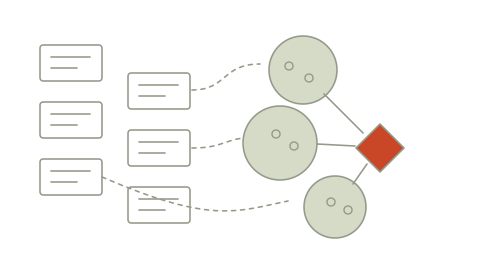
01 / UNDERSTAND
What is thematic analysis?
Thematic analysis is a family of approaches for interpreting patterns in qualitative material. This guide follows Braun and Clarke’s reflexive approach, where researchers actively develop themes through engagement with data. Themes capture shared meaning around a central idea, rather than headings copied from interview questions.
Coding reliability approaches have different assumptions and procedures, often using structured codebooks and agreement measures. These measures are not quality requirements for reflexive thematic analysis. Name your actual approach.
Why use Thematic Analysis?
Thematic analysis connects interview accounts into an argument about what an experience means. It makes the researcher responsible for showing how that argument relates to the material, rather than treating clustered notes as self explanatory findings.
When to use it
USE IT WHEN
You need to interpret a pattern across interviews, diaries or other qualitative material.
A research question concerns experiences, meanings or practices rather than population prevalence.
You can revisit source material instead of relying entirely on workshop summaries.
When to choose another method
Use Affinity Mapping to organise observations quickly; a cluster is not automatically a developed theme.
Use Survey Research when the decision requires an estimate of how widespread something is.
Use User Interviews when the existing material lacks the detail needed to answer the question.
What you’ll need
Keep detailed records linked to their context. State the research question and whether you focus on explicit accounts or underlying assumptions. Record your standpoint and relationship to the service. Protect identities while preserving details that matter to interpretation.
What the analysis needs
Keep the elements that help answer your question and support a decision.
The interpretive question that gives the analysis a purpose.
Material with context, source references and appropriate access controls.
Concise labels for analytically useful features of the material.
Patterns of meaning held together by a central organising idea.
Notes about how your position and decisions shape the interpretation.
An account connecting themes, extracts, limits and the research question.
02 / PUT IT INTO PRACTICE
How to conduct thematic analysis
Keep evidence and assumptions distinct. Revisit your work when new information changes your understanding.
01
Frame the analysis
Specify the question and approach before coding. Note what this dataset can support.
Ask how library patrons decide a reserved book is safe to collect.
02
Become familiar
Read whole accounts repeatedly. Note context and early interpretations without fixing themes.
Keep a patron’s travel arrangements beside their account of collection messages.
03
Code the material
Work across the dataset and revisit codes as your understanding changes. Keep source links.
Distinguish checking a message from seeking reassurance from library staff.
04
Develop candidate themes
Explore how codes relate around a meaningful concept, rather than a shared topic word.
Consider confidence in permission to travel, rather than a theme called email.
05
Review the interpretation
Compare candidates with extracts and whole accounts. Split, combine or discard weak themes.
Examine accounts where a message was sufficient and explain that variation.
06
Define each theme
State its central idea, scope and relationship to other themes. Choose an informative name.
Explain when reassurance matters instead of claiming all patrons distrust notifications.
07
Write an evidenced account
Combine interpretation with contextualised extracts and acknowledge limits. Separate implications from findings.
Propose investigating collection certainty before recommending a particular messaging feature.
Example: certainty before a library visit
Fictional scenario: a library studies how patrons use reservation notices. Some invented accounts describe checking opening hours; others describe phoning staff before arranging a bus trip. The researcher first groups these under communication, then realises that channel choice is not the shared meaning.
A candidate theme, making the journey feel justified, connects reassurance to the effort of visiting. Accounts of patrons living nearby complicate that interpretation: they can tolerate an unsuccessful visit. The theme therefore concerns the stakes of travelling, not a universal preference for telephone support.
The team would investigate how a notice establishes collection certainty. These accounts and the interpretation are invented teaching material, not library research findings.

03 / BELOW THE SURFACE
Below the surface: a useful implication can narrow a rich interpretation
The pressure to deliver a feature can turn a theme into a label for a predetermined solution.
MEANING
What idea holds this theme together?
Go beyond a topic heading.
VARIATION
Which account complicates the interpretation?
Describe its effect on the theme.
TRANSLATION
What would the proposed action leave unresolved?
Keep implications proportionate.
A theme about travelling may involve caring responsibilities, unreliable transport and disappointment. Renaming it better notifications removes those relationships and makes messaging appear sufficient. Preserve the meaning before translating it into action.
Separate interpretation from response. Ask which parts of the theme a proposal addresses and which it leaves unresolved. A clear collection message might reduce uncertainty while leaving transport barriers intact.
Invite colleagues to question the interpretation, with source material available. In reflexive analysis, dialogue can deepen thinking; it is not a search for a single correct code or an agreement score. Show your interpretive decisions, including inconvenient material, so the team can judge the argument.
Thematic Analysis companion worksheet
These original Design Iceberg companion sheets support analysis planning and theme review. Page one records the question, standpoint, material, codes and candidate meanings. Page two tests a theme’s coherence, supporting material, variation and proposed implications. They are working aids, not official or validated Braun and Clarke instruments.


Practical tips
Keep source links while moving between extracts and whole accounts.
Name themes for their central idea, not the interview topic.
Document revisions while your interpretation is still developing.
Common mistakes
Presenting interview question headings as fully developed reflexive themes.
Treating frequency as the only reason a pattern matters.
Combining reflexive claims with unexplained coding reliability procedures.
What you’ll get
A defensible interpretation of patterns in this dataset. Carry the limits forward when using themes to frame opportunities, and gather further evidence where a design decision extends beyond the accounts.